When starting a construction or renovation project, most homeowners face a familiar challenge: managing multiple professionals, from architects and designers to builders and subcontractors. This traditional approach can create confusion, delays, and miscommunication. That’s why more homeowners and business owners are turning to the design-build model—a streamlined process where everything is handled under one roof, from concept to completion.
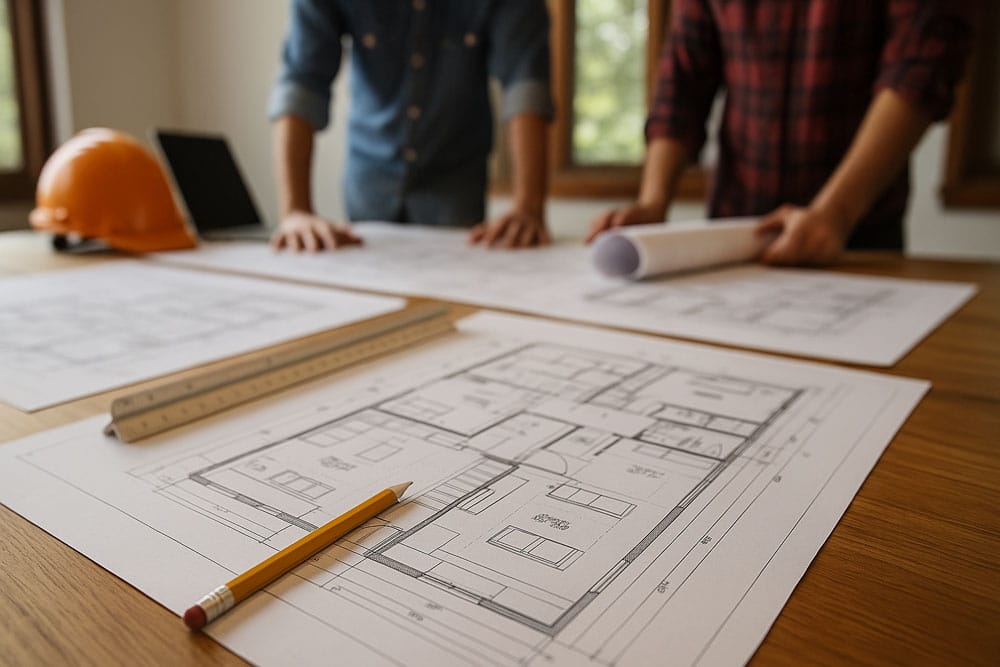
We’ve embraced the design-build method because it delivers better outcomes for our clients. It simplifies the process, reduces surprises, and creates a single point of accountability throughout the entire project. From the initial idea to the final walkthrough, we’re involved at every step to ensure consistency in vision, budget, and timeline.
In a traditional construction setup, the homeowner works with a designer or architect first. Once the plans are finalized, they’re handed off to a contractor for pricing and building. That might sound efficient, but what often happens is scope mismatches, budget overruns, and design elements that aren’t feasible in the real-world build. With design-build, design and construction professionals collaborate from day one—resulting in a more accurate, realistic, and cost-effective process.
The biggest benefit of this integrated approach is communication. We coordinate everything—from design reviews and material choices to structural considerations and building codes. That reduces friction, shortens timelines, and minimizes expensive change orders halfway through construction. When design and build teams are on the same page, the process just works better.
We guide our clients through each stage, starting with discovery and conceptual design. We learn how the space will be used, how it should look, and what limitations we need to plan around. From there, we create a detailed design plan that includes material selections, finish options, layout solutions, and an initial budget forecast. Once approved, we transition directly into permitting and construction without delay.
Design-build also makes budgeting more accurate. Because our construction team is involved in the planning phase, we can provide real-world costs early on—not guesses or lowball estimates that later get revised. This transparency allows clients to make informed decisions before construction begins, helping them stay within budget and prioritize where to invest.
The design-build model also supports flexibility. As construction progresses, clients sometimes want to make changes—whether it’s adding a window, choosing a different finish, or adjusting room layouts. Because the design and construction teams are in constant communication, we’re able to adapt quickly without halting the entire project or triggering new design contracts.
Another key advantage is speed. With everyone working together under one contract, we eliminate the gaps between design, approval, and construction. That reduces delays and creates a more efficient schedule, which means faster results for you. We’re able to overlap tasks where possible and proactively solve problems before they slow down progress.
Quality control is another reason we champion the design-build model. Because we manage every phase, we ensure that each element is built as designed and meets the highest standards. There’s no finger-pointing or blame-shifting—only a clear commitment to the final result.
Ultimately, the design-build approach is about simplicity, clarity, and trust. You have one team, one contract, and one shared vision from start to finish. That alignment results in projects that stay on track, meet expectations, and reflect your goals without compromise.
Contact Off Duty Fireman Construction at 828-676-0854 or visit our Facebook page to experience how the design-build approach can simplify and elevate your next project.
#DesignBuildConstruction #StreamlinedProjects #BuildWithConfidence